Contraception and Medical Law as Youth
Access and Availability
in the United States
Medical Law Around Youth
When a minor is seeking out medical attention for one reason or another, a large quantity of the meaningful decisions are commonly thought to be made by the parents or guardians caring for that youth. This can become a large issue if we are looking at contraception, reproductive and sex-related health that a child or teen might not feel the most comfortable sharing with their parents or guardians. However, there may be more options available to minors looking to take control of their health and body decisions than most realize.
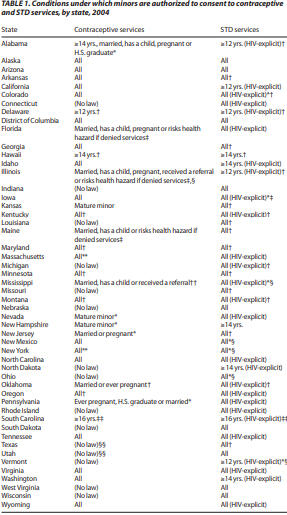
Based on a study performed by Rachel K. Jones, a senior research associate at The Alan Guttmacher Institute (AGI) and Heather Boonstra, a senior policy advisor at the same research institute, we find that there is no laws preventing minors from making their own medical decisions. More than 21 states including the District of Columbia have moved to explicitly place the task of monitoring medical information and consent permissions over to children. (Jones, 2004) Especially at or above the age of 16.
Across the United States, health care professionals have begun to see an upsurge in the amount of patients that they encounter that are seeking out information on things such as how to prevent STIs and get tested for them, as well as how to procure protection in a discrete manner. Additionally, transgender youth experience an entire array of potential problems and hurtles when it comes to trying to receive permission to begin hormone therapy. Becoming connected with mentors and knowledgeable people in the first place to talk about their life and journey with can be a difficult thing, but when the insurance bills are running to the main parent, it can be hard if not impossible to keep to yourself. The effects of states now allowing informed teens to take full advantage of clinical confidentiality is a box of mixed feeling for many parents. They fear for the health and safety of their children's decisions, and yet also want to respect their privacy
Available Contraception
While considering more about the potential benefits and downsides of empowering our youth with the decision over their medical health, Geoffrey Mospan, PharmD, BCPS, Assistant Professor at Wingate University School of Pharmacy, states that "At the federal level, the Title X Family Planning Program issues grants to clinics across the country that provide family planning and related preventive health services. Adolescents who receive care at one of these federally funded facilities are not required to have their parents’ or guardians’ consent to obtain hormonal contraceptives or other preconception healthcare services." (Geoffrey Mospan, 2018). Upon an analysis of the laws and behaviors of companies especially pharmaceutical, as a pharmacist, Mospan finds it perplexing the state that these federal laws put pharmacists in.
As a result of these laws is that many people(minors included) now are able to access medical care discretely for sexual inquiries and check-ups from the moment they have their insurance information. Scheduling an appointment through a Public Health Clinic, 340B provider, or a Title X clinic. As long as your care provider has you fill out a form with their clinic detailing who can access your information then there will be none leaked to guardians. Depending on the income of the patient, the cost for connecting with the doctors at the clinic can be as low as $0, but tends to cost around $20-25 an appointment. If you are seeing a specialist however such as a gynecologist, you may expect to pay as much as $125 per visit...
Single-Use Contraceptives
There are many single use contraception options such as condoms, spermicide, and morning-after pills. They can largely be bought discretely and over-the-counter. If you are a teenager and looking to prevent pregnancies, then these are reasonable options and likely what doctors will point you to. Despite these being cheaper than talking to a medical professional regarding your sexual health and how you can prevent pregnancies, that does not mean that they are an efficient alternative economically, nor for your body. The vast majority of the testing that has been done on hormonal contraceptives has been completed by adults with fully developed brains and bodies. (Brierley & Larcher, 2014) It is not completely clear at this point still what the exact effects are of exposing your body to hormones once every few days consistently starting from a few age, but many view it as a topic of great speculation.
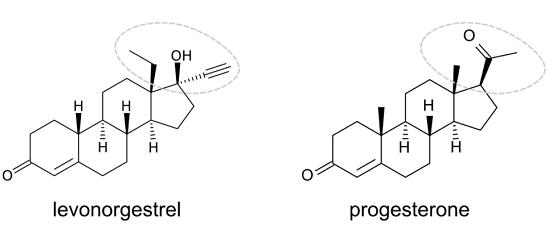
Using one time contraceptives tend to be expensive when you look in the long run. A single condom can cost as much as a dollar, making for a total of as much as $100-300 spent a year on condoms if someone is consistently having sex. This number can be even greater when looking at morning-after pills seeing as a single months supply can range from $40-50 commonly from suppliers like Plan B One-Step, Take Action, and Option 2. (Parenthood, Plan B morning-after pill: How plan B works; side effects). This makes for a total yearly spending of up to $600 dollars going towards this form of contraception with consistent sex. There is low potential for side-effects due to this medication and though it may not be the most economic nor tested for youth, it is likely safe. Levonorgestrel, the active hormone in Plan B is one that mimics the hormone progesterone which is found naturally in the body and prevents an egg(oocyte) releasing to the ovaries.
Long-Lasting Contraceptives
Intrauterine Device (IUD) Implants, Diaphragms, and Birth Control shots cost more than other one-time use forms of birth control in the short term, but will save a large amount of money in the long run. Hormonal IUD implants release a form of the hormone progestin (a synthetic progesterone) too. The largest difference is that it is in a very small amount that the body regulates itself to as the new normal and experiences at a consistent rate for many years meaning that you body is more easily able to return to a homeostasis and adapt to it than suddenly being hit by an influx of it. There are four main types of hormonal UIDs and each one has a different rate of release of progestin and amount of time that it lasts. There is also one other other FDA approved IUDs being Paraguard which uses copper instead of hormones to kill sperm. (Parenthood, Iud Birth Control: Info about Mirena & Paragard iuds)
Another form of longer lasting birth control is the Diaphragm. This is a silicone cup that is placed into the vagina in the hours leading up to sex and stops sperm from entering the uterus. There is a slightly lower rate of effectiveness using it than other forms, though it should not cause discomfort for either partner during usage. The majority of the lower effectiveness has been attributed to human error, much is actually the case with of other forms of contraceptives as well. According to Planned Parenthood, a two year Diaphragm will cost the user around $200 total and approximately $1,300 for a twelve year IUD including in clinic appointments and administering it before insurance. This makes a Diaphragm a reasonable equivalent to condoms in price and protection if a patient chooses to have it implemented. An IUD however does not need to be removed and requires little maintenance.
Website Written By: Isaiah J. Coleman
Resources
If you are experiencing stress or worry about your ability to empower your sexuality and make decisions regarding contraception, please reach out to a local clinic or one of the resources below
Links:
Planned Parenthood: Offers general health care, abortion services, free contraceptive resources, as well as patient education
STD Testing: Helps locate a lab near you where you can be tested for STDs. It is also good to note that if you do not have a center near you, then you can ask your General Practitioner or Gynecologist to administer one discretely at most clinics without prior scheduling
AfterPill: Offers levonorgestrel (same exact progestin in Plan B) pills in one month supplies for $20 + $5 shipping, which is a much more affordable way to buy Plan B
National Insitute of Health: The subsection of NIH that handles Child Health and Development sponsors many of these programs that may offer help with sterilization, contraception, safety, and find clinics/appointments
Information Used
Afterpill. (n.d.). Save off plan B cost with AfterPill. Syzygy Healthcare Solutions LLC. Retrieved February 9, 2022, from https://afterpill.com/
Brierley, J., & Larcher, V. (2014, December). Clinical trials of contraceptive agents in those under 16 years of age: Are they necessary, ethical or legal? Archives of disease in childhood. Retrieved February 9, 2022, from https://www.ncbi.nlm.nih.gov/pmc/articles/PMC4251199/
Geoffrey Mospan, P. D. (2018, May 18). Hormonal contraceptive consent by minors: Implications for pharmacists. U.S. Pharmacist – The Leading Journal in Pharmacy. Retrieved February 9, 2022, from https://www.uspharmacist.com/article/hormonal-contraceptive-consent-by-minors-implications-for-pharmacists?utmsource=TrendMD&utmmedium=cpc&utmcampaign=USPharmacistTrendMD1
Jones, R. K. (n.d.). Confidential Reproductive Health Services ... - guttmacher.org. Confidential Reproductive Health Services for Minors: The Potential Impact of Mandated Parental Involvement for Contraception. Retrieved February 9, 2022, from https://www.guttmacher.org/sites/default/files/pdfs/pubs/journals/3618204.pdf
Parenthood, P. (n.d.). Plan B morning-after pill: How plan B works & side effects. Planned Parenthood. Retrieved February 9, 2022, from https://www.plannedparenthood.org/learn/morning-after-pill-emergency-contraception/whats-plan-b-morning-after-pill#::text=Plan%20B%20One-Step%20usually%20costs%20about%20%2440-%2450.
Parenthood, P. (n.d.). Iud Birth Control: Info about Mirena & Paragard iuds. Planned Parenthood. Retrieved February 9, 2022, from https://www.plannedparenthood.org/learn/birth-control/iud#::text=What%20are%20the%20types%20of,IUD%20doesn't%20have%20hormones.